
Woodworm treatment in Bedfordshire
Woodworm is not a worm. It is the larvae of wood-boring beetles eating their way through timber, and the holes everyone points at are where they left, not where they are.
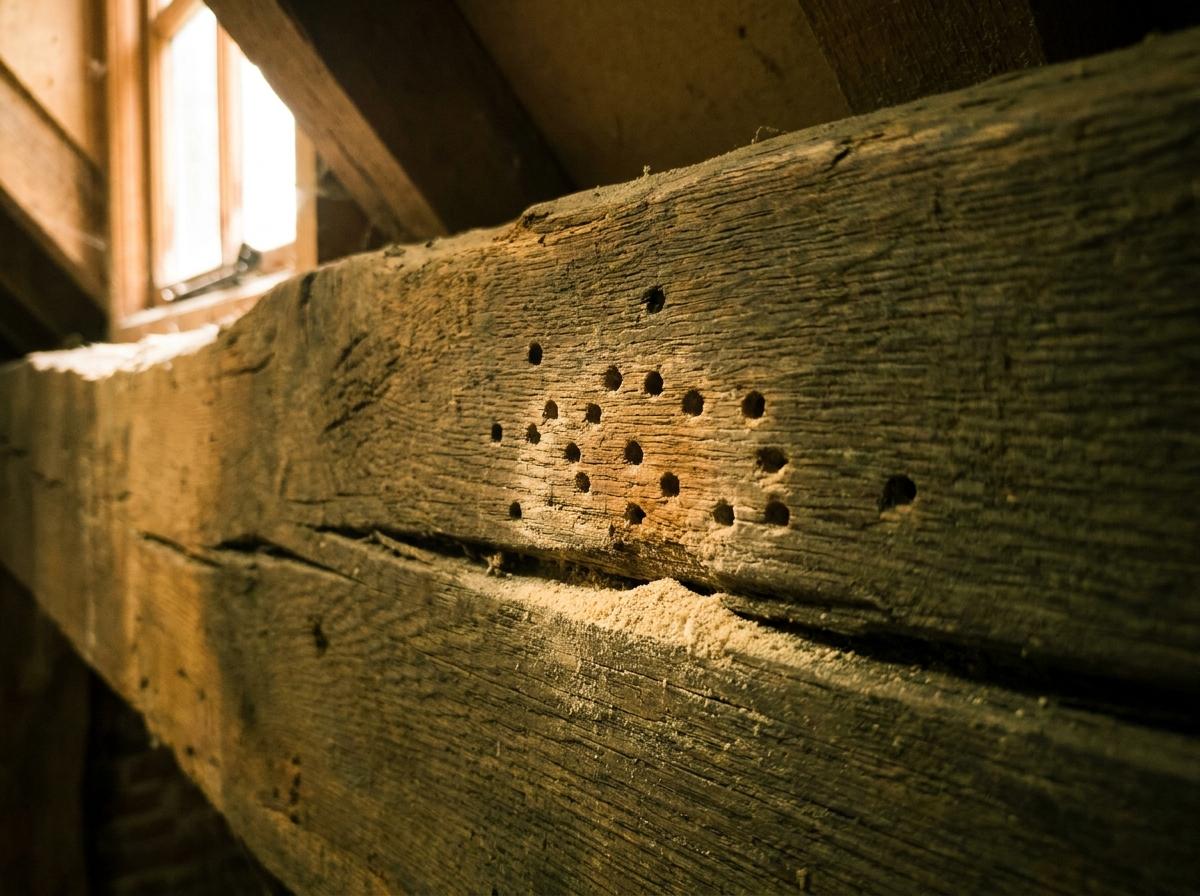
Most woodworm people find is already over
This is the thing worth knowing before anyone quotes you. Exit holes last as long as the timber does, so a beam drilled with holes may have been treated decades ago, or the beetles may have left in the 1970s and never come back. Treating historic damage achieves nothing except a bill.
What tells you it is live is bore dust, a fine gritty powder like coarse flour, sitting below the holes or caught on surfaces underneath. Fresh holes are also pale and sharp-edged inside, where old ones have greyed over. Adults emerge between roughly March and August, so that is when you are most likely to see the beetles themselves or a scatter of dust that was not there last week.
We survey before we treat, and we will tell you plainly if what you have is historic. We would rather say that than sell a treatment that is not needed.
Which beetle it is changes the answer
The common furniture beetle is the one behind most domestic woodworm in Britain, and it leaves exit holes around two millimetres across, roughly the size of a pinhead. It is the least alarming of them.
Deathwatch beetle makes larger holes, nearer three millimetres, and prefers old hardwood, so it turns up in oak beams in period properties rather than modern joists. House longhorn beetle is rarer and far more serious, because it attacks structural softwood and is treated as a building matter rather than a pest one.
Identifying which it is, and whether the timber is structural, is most of what a survey is for. A treatment aimed at the wrong species on the wrong timber is wasted.
Damp is usually the reason it is there
Wood-boring beetles want timber with moisture in it. Dry, well-ventilated wood is a poor host, which is why live woodworm tends to turn up in roof voids with a leak, in cellars, under floors with blocked airbricks, and in timber against a damp wall.
That matters because treating the beetles without fixing the water means the conditions are still there when the next generation arrives. Where we find a damp cause we will say so, even though putting it right is usually somebody else's trade rather than ours.
Common questions
Is my woodworm still active?
Look for bore dust rather than holes. Holes stay in the timber for the life of the wood and tell you only that beetles were once there. Fresh dust, and holes that look pale and clean inside, point to activity. If you are not sure, that is exactly what the survey is for.
Do I need treatment if the holes look old?
Often not. A good proportion of what we are called to in older Bedfordshire properties is historic and needs nothing doing. We will tell you that rather than treat it anyway.
Will woodworm spread to my furniture?
It can, where the furniture is a suitable timber and the conditions suit. In practice the bigger risk is the other way round: a piece of infested furniture brought into a house is a common way live woodworm arrives somewhere it was not before.
Does the house need to be empty for treatment?
Not usually for a domestic job, though you will need to keep out of treated areas for a period we will tell you on the day, and we will talk through anything that needs moving or covering beforehand.
We work from Cople, and cover the county from there
Tell us what you have seen
Describe it on the phone and we will tell you what it is likely to be, and what sorting it actually involves, before you book anything.