Rat and mouse control across Bedfordshire
Rodents are the problem we deal with all year, and the one most likely to be doing damage you cannot see yet.
Why rodent calls spike after harvest
Bedfordshire is arable country. Through the summer, rats and mice living in field margins around Biggleswade, Sandy and the villages have everything they need outdoors. Once the fields are cut and ploughed, that cover and food disappear more or less overnight, and the nearest buildings become the obvious alternative.
That is why the phone starts ringing in late September, and why properties backing onto farmland get it worse than those in the middle of town.
The damage people do not see
Rodents gnaw constantly because their incisors never stop growing. In practice that means cable insulation, water pipes, loft insulation and stored goods. Damaged wiring in a loft is a genuine fire risk and it is not unusual for it to be the first real sign a household notices.
There is a health side too. Rats are associated with leptospirosis and salmonella, and contaminated surfaces in a kitchen or food store are a serious matter for any business.
How we treat, and why proofing matters more
Treatment usually takes more than one visit. We survey first to work out how they are getting in and how far the problem has spread, treat, then return to check take-up and confirm the activity has stopped.
The part that stops it happening again is proofing. A mouse gets through a gap the width of a pencil and a rat through one the size of a fifty pence piece, so we look at air bricks, service entries, damaged gully seals, gaps under doors and roofline junctions, and tell you what needs closing.
Common questions
How do I know whether it is rats or mice?
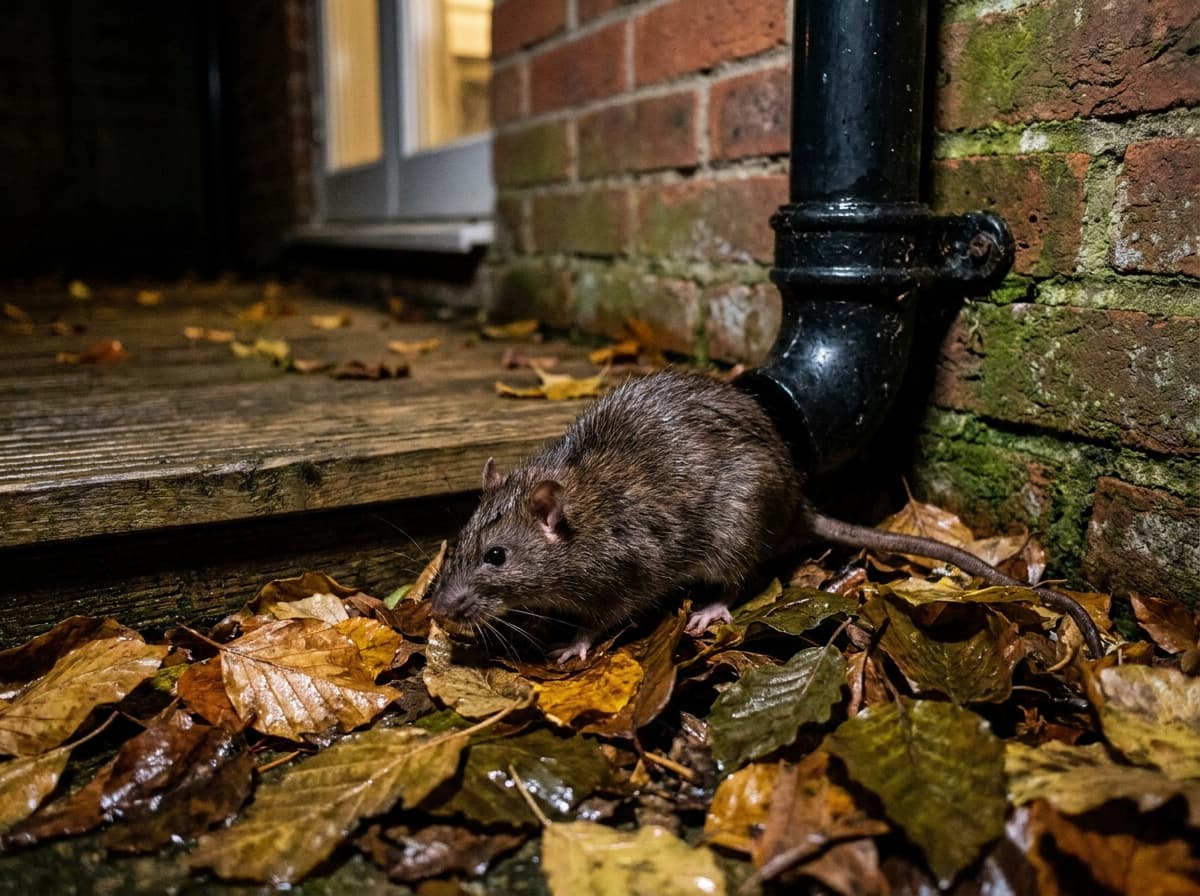
Droppings are the quickest tell. Mouse droppings are small dark grains a few millimetres long, rat droppings are much larger and tapered. Sound helps too: mice are light and fast, rats are heavier and slower overhead.
How many visits will it take?
Most domestic rodent jobs take two or three visits. The first identifies and treats, the later ones confirm activity has stopped and deal with anything that has moved. We will tell you at the first visit what to expect.
Do you handle rodents for food businesses?
Yes. We hold scheduled contracts for commercial premises including food businesses, with documented visits and reporting that stands up to an audit.
Will you block up where they are getting in?
We identify the entry points as part of the job and advise on proofing. Getting that done is what stops the problem returning the following autumn.
We work from Cople, and cover the county from there
Tell us what you have seen
Describe it on the phone and we will tell you what it is likely to be, and what sorting it actually involves, before you book anything.