
Bee removal and swarm relocation
Bees are the one call where the right answer is usually not treatment. Wherever it is possible, a swarm is relocated rather than destroyed.
Work out what you are actually looking at
A lot of bee calls turn out to be wasps, and a fair number of wasp calls turn out to be bees. Honey bees are golden brown and hairy, bumble bees are large and round, and both are far less interested in you than a late-season wasp is.
It matters because the response is completely different. Describe what you are seeing on the phone, or send a photograph, and we will tell you what it is before anybody comes out.
Swarms look alarming and usually are not
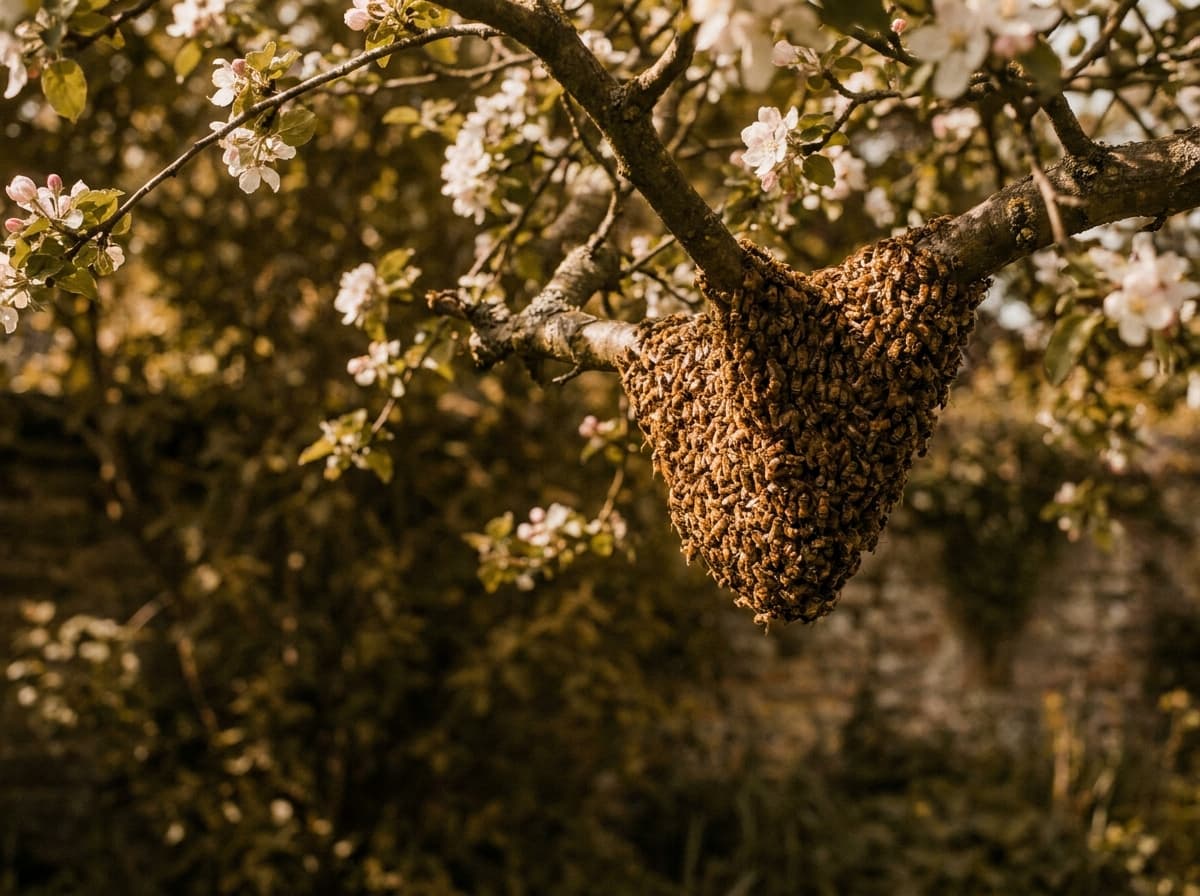
A honey bee swarm hanging in a tree is a colony between homes. The bees have gorged on honey before leaving, which makes them about as docile as they ever get, and most swarms move on by themselves within a day or two.
If it has settled somewhere awkward we will arrange collection and relocation so the colony survives. That is almost always preferable to treatment and it is what we aim for first.
Bumble bees and when to leave well alone
Bumble bee nests are small, last a single season and die out naturally by late summer. They very rarely need any intervention at all, and we will say so rather than sell you a treatment you do not need.
Where a colony is genuinely in the wrong place, in a cavity wall above a door or inside a chimney used daily, we will look at the options with you honestly.
Common questions
Will you kill the bees?
Only where there is genuinely no alternative. Our first approach with honey bees is relocation so the colony survives, and with bumble bees it is usually to advise leaving them, since the nest dies out naturally at the end of the season.
How do I tell a bee from a wasp?
Wasps are bright yellow and black with a smooth, hard-looking body and a narrow waist. Honey bees are duller golden brown and noticeably hairy. If you are unsure, send us a photograph.
There is a swarm in my garden, is it dangerous?
A settled swarm is usually very docile. Keep people and pets away from it, do not spray it or throw anything at it, and ring us. Most swarms move on by themselves within a day or two.
We work from Cople, and cover the county from there
Tell us what you have seen
Describe it on the phone and we will tell you what it is likely to be, and what sorting it actually involves, before you book anything.